
Regulating an accessory dwelling unit in HOAs can come as a challenge to board members. State laws may even render decisions moot, depending on what they allow. Boards must first familiarize themselves with the laws surrounding ADUs in their state. From there, they can navigate restrictions without running into liability.
What is an Accessory Dwelling Unit in HOAs?
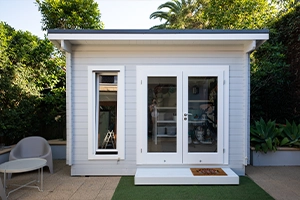
Accessory dwelling units, otherwise known as ADUs, are secondary homes that are located on the same lot as the primary residence. Since they don’t function as the main home, ADUs are typically smaller in size and area.
Homeowners like ADUs because they offer extra living space. This lets them rent out the space or allow their relatives to occupy it. Some use them for their own purposes, such as a home office or a workshop.
These units add to the housing options available in dense cities or large suburbs. They also tend to be more affordable than their counterparts in the housing market. Still, some communities don’t allow ADUs because they pose certain problems.
Can the HOA Ban Accessory Dwelling Units?
Whether an HOA can ban accessory dwelling units depends on two factors: state laws and its governing documents.
Some states prohibit associations from imposing a blanket ban on ADUs. This is to encourage more affordable housing options in the market. Board members should check the laws in their state before implementing ADU restrictions. When in doubt, it is best to consult a legal professional.
On the other hand, some state laws are silent on the issue. Others defer to the association board’s judgment or allow prohibitions or restrictions if their governing documents reflect them. Boards should check their CC&Rs and bylaws for guidance.
Are There HOA Limitations on ADUs?
Yes, there can be limitations on an accessory dwelling unit in HOAs. It ultimately depends on what state laws and the governing documents say. That said, many wonder why associations are even against ADUs in the first place. Although they are beneficial to homeowners and renters, ADUs raise concerns for associations.

- Noise. More ADUs mean more residents, which will naturally lead to more noise. When relatives or renters add to the living space, neighbors might complain about loud noise.
- Privacy. If a two-level ADU is built in a neighborhood of one-level homes, residents may feel their privacy is being invaded. Those living on the second level can easily peek into neighbors’ yards or homes.
- Parking. If parking is already limited in the community, welcoming more residents — and, therefore, more vehicles — can cause even more parking problems. Associations might find cars parked on the street or in common areas.
- Traffic. With more people moving into the association, traffic will inevitably increase. This can lead to safety risks and even overpopulation.
All in all, these concerns can add up and trigger complaints in the community. Unsatisfied homeowners, coupled with all the above problems, can cause property values to plummet, too.
Which States Allow ADUs in HOA Communities?
While some states have ADU-friendly laws, they don’t all apply to homeowners associations. In fact, only one state expressly prohibits HOAs from banning ADUs: California.
Under Civil Code Section 4751, homeowners associations may not include any provision in their governing documents that “either effectively prohibits or unreasonably restricts the construction or use of an accessory dwelling unit or junior accessory dwelling unit” on a lot zoned for single-family residential use.
That said, California law does allow reasonable restrictions for accessory dwelling units in HOAs. These restrictions typically relate to design or aesthetic standards.
California is a leader in ADU-friendly regulations. As the state with the largest population, this comes as no surprise. It offers a statewide incentive program to encourage the construction of affordable ADUs and JADUs. Many local cities even have more lenient parking requirements for these units.
States With ADU-Friendly Laws

Although California is the only state that effectively prevents HOAs from banning ADUs, other states also have ADU-friendly laws. These laws don’t specifically pertain to HOAs, but they are worth mentioning nonetheless.
- Arizona. Arizona has rules that permit accessory dwelling units, but cities can impose stricter regulations. At the state level, larger cities must allow at least one ADU per single-family home. There are limitations on the size, but these can vary.
- Connecticut. In Connecticut, homeowners have the right to build ADUs, meaning they don’t need approval from city officials.
- Florida. Florida does allow accessory dwelling units, but cities can have their own regulations, too.
- Maine. In 2022, Maine passed a law that permitted homeowners to build ADUs even in areas zoned for single-family use only.
- Massachusetts. The state of Massachusetts allows ADUs, but different cities can have different restrictions.
- New York. As a highly dense state, New York City, NY, has launched a program encouraging owners to build ADUs.
- North Carolina. In NC, ADUs are allowed, but regulations can vary by locality.
- Oregon. Oregon allows ADUs and even has regulations designed to make them more attractive, including relaxed parking rules.
- Washington. The recently passed House Bill 1337 eased certain regulations to encourage the construction of ADUs. This law applies statewide.
Which States Ban ADU in HOAs?
No state has a complete ban on accessory dwelling units as a whole, but regulations can vary by local area. Some states have more restrictive laws than others, making it difficult for homeowners to build ADUs in general. These include Alabama, Arkansas, and Alaska.
Additionally, there is no state that prohibits the construction of an accessory dwelling unit in HOAs. That said, board members must still check their governing documents. Even if state laws don’t ban ADUs, the CC&Rs and bylaws may contain prohibitions or restrictions concerning the development of ADUs in the community.
ADU in HOAs: A Balancing Act
There are several considerations to make when regulating an accessory dwelling unit in HOAs. Board members must acknowledge that ADUs come with certain risks, but they are beneficial to homeowners and the housing market as well. It is important to strike the right balance by allowing ADUs while imposing restrictions that support harmony and better living.
HOA Explore allows associations to search for HOA management companies easily. Use our online directory today!
RELATED ARTICLES:
- 2025 Virginia HOA Laws Updates For Boards And Homeowners
- Maryland HOA Laws Updates And News In 2025
- North Carolina HOA Laws Update: New Legislation In 2025