
Board members must familiarize themselves with homeowners rights against HOA communities. These rights must be upheld and protected, and the board’s decisions should never infringe on them. Violating these rights can result in liability for both the association and its board members.
Understanding Homeowners Rights Against HOA

Homeowners associations protect property values by enforcing strict rules on residents. That said, these rules should never violate homeowner rights in HOAs. Breaches can result in a number of consequences.
For one thing, homeowners can take legal action against their association if they believe their rights have been violated. When this happens, the HOA can face penalties and damages. Lawsuits can even name the board members personally. Although there are protections in place for boards, they may lose this protection if they:
- Breach their fiduciary duty,
- Discriminate against homeowners,
- Commit financial crimes,
- Abuse their power, or
- Exhibit gross negligence or intentional misconduct.
What Rights Does a Homeowner Have Against an HOA?
The key to avoiding liability is knowing what rights homeowners have in the first place. Only then can board members make smart and lawful decisions. Below are homeowners rights against HOA or condo associations.
1. Bundle of Rights
Property owners have a bundle of legal rights: the right of possession, control, exclusion, enjoyment, and disposition. The right of possession refers to the legal ownership of the titleholder. The right of control, on the other hand, stipulates that the owner can use their property as they see fit, but HOA rules still apply.
Moreover, the right of exclusion allows owners to dictate who may enter their home. Of course, there are exceptions to this, such as warrants, court orders, and easements. The right of enjoyment states that owners can engage in lawful activities they choose.
Finally, the right of disposition means the owner can transfer ownership of their home to someone else. That said, certain things can interfere with this right, such as when the association has a lien on the home.
What Boards Should Do:
Board members must be aware of the bundle of rights that come with homeownership. They must do their best to uphold these rights while still enforcing the community’s rules. Understand that associations also have legal authority stemming from state laws and their governing documents.
2. Right to Challenge Fees and Assessments

Homeowners are obligated to pay dues and assessments to their association. While the board is responsible for setting and collecting these fees, homeowners have the right to question the amounts, especially if they suspect mismanagement.
They can challenge sudden, steep increases in regular dues or probe into why the board wants to levy a special assessment. After all, homeowners have a right to know what the association is using their payments for.
That said, homeowners should not stop paying their dues, even if they wish to take formal action against the HOA. Defaulting on their dues can only complicate matters and will even give the HOA grounds to foreclose on the home.
What Boards Should Do:
Board members must carefully review state laws and their governing documents before raising dues or collecting special assessments. They must follow proper procedure and fulfill the requirements stipulated, including providing adequate notice.
Homeowners must also be made aware of the reasoning behind the increase or charge. If questions arise, the board must answer them honestly and professionally. Presenting a breakdown of the fees will help resolve any misunderstandings.
3. Right to Have an Opportunity to be Heard
In most states, homeowners have a right to a disciplinary hearing before receiving a penalty for a violation. The association must provide written notice of the violation, along with an opportunity for the owner to appear before the board.
What Boards Should Do:
Boards should check state laws and their governing documents for hearing requirements. Even if a hearing is not mandated, it is best to give owners a chance to present their side anyway. This supports open communication and a fair enforcement process.
4. Right to Inspect Association Records
Most states give homeowners the right to examine and copy the association’s records. These include financial reports, budgets, a summary of reserves, executed vendor contracts, meeting minutes, and governing documents.
Homeowners must typically follow certain procedures and requirements when requesting access. This includes submitting a written request and even paying for the cost of producing the records.
What Boards Should Do:
Board members must comply with these requests within a reasonable timeframe. Never withhold information that homeowners have a right to know. Doing so will only damage their trust and expose the association to liability.
5. Right to Attend Meetings

Homeowner HOA rights include the right to attend annual membership meetings and board meetings. The only exception is when the board must convene in executive session, otherwise known as closed board meetings. At these meetings, boards discuss confidential matters, such as ongoing litigation and delinquent owners.
What Boards Should Do:
Boards must provide adequate meeting notices to all homeowners. Let them know they are free to attend meetings and participate in open forums. If state laws and governing documents allow, the board should also consider streaming the meeting virtually so owners can attend remotely.
6. Right to Display the American Flag
The Freedom to Display the American Flag Act of 2005 protects a homeowner’s right to fly the U.S. flag. No association can have a rule that forbids the display of this flag. That said, associations may impose reasonable restrictions concerning the height and placement of the flag.
What Boards Should Do:
Boards must allow homeowners to fly the American flag. If the association has flag restrictions, the board must review them carefully and enforce them consistently to avoid interfering with federal law.
7. Right to Reasonable Accommodations
The Fair Housing Act requires associations to make reasonable accommodations to residents with disabilities. For example, an HOA’s no-pets policy doesn’t apply to service animals. It is also important to note that states have their own fair housing laws.
What Boards Should Do:
Unless the accommodation would pose undue hardship or a direct threat to the association, boards must fulfill such requests. Make sure to document every decision, action, and correspondence. When in doubt, it is always best to consult a lawyer for guidance.
8. Right to Fair and Equal Treatment
Associations must never discriminate against homeowners. Discrimination can take many forms, such as denying housing on the basis of a person’s protected class, enforcing the rules selectively, or enacting rules that have a disproportionate effect on owners.
What Boards Should Do:
Boards must approach every decision and action with fairness and objectivity. Never let personal biases or vendettas interfere with policies and enforcement. Documentation will also be helpful should things escalate.
9. Right to Privacy
An association may want to install surveillance cameras within the community, whether to promote security or monitor violations. That said, homeowners have a right to privacy, so boards must be careful about where these cameras are placed.
What Boards Should Do:
Associations must never point cameras at windows, doors, or any place where people have a reasonable expectation of privacy. Cameras should never be placed in changing rooms or restrooms, either. The same rules apply to owners who wish to install cameras on private property.
10. Right to Challenge Rules
Homeowners have a right to challenge any rules that are inconsistent, discriminatory, or unreasonable. Some rules may also be obsolete and need to be changed. If a rule is improperly enacted, i.e., failing to go through the proper process, then owners may question its validity. Additionally, owners can dispute fines and challenge architectural denials.
What Boards Should Do:
Boards do not have unlimited or unrestricted power. They must always enforce rules in accordance with the requirements and procedures set forth in state laws and their governing documents. Enforcement must follow the same principle.
If there are rules that require updating, the board must work to amend them. This often involves proposing an amendment, notifying homeowners, seeking input, and holding a meeting. Membership votes are necessary for amendments to the CC&Rs and even the bylaws. Meanwhile, resolutions typically only require a board vote.
11. Right to Take Legal Action
Lawsuits are another one of homeowners rights against HOA communities. This means residents may sue the association or individual board members for their actions or decisions. That said, lawsuits tend to be expensive and time-consuming, so owners must be prepared for the costs.
What Boards Should Do:
Boards should first attempt to resolve disputes internally. Sometimes, disgruntled homeowners only need a sympathetic ear. If internal methods don’t work, proceed with alternative dispute resolution, such as mediation and arbitration. These strategies are more cost- and time-efficient compared to lawsuits.
Legal liability often discourages volunteers, but board members are not entirely exposed. The Business Judgment Rule and some state laws offer protection, provided the board did not act with malice or neglect. Additionally, D&O insurance will cover the legal expenses and damages.
12. Right to Satellite Dishes and Antennas
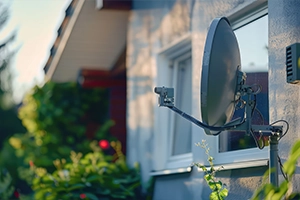
Homeowners have a right to install and use satellite dishes or antennas. The Over-the-Air Reception Devices Rule (OTARD) explicitly protects this right. That said, associations may impose reasonable restrictions, such as the placement and design of these devices.
What Boards Should Do:
Boards must make sure their association’s rules do not conflict with the OTARD rule. It is also imperative to enforce any related rules with fairness and consistency.
13. Right to Solar Drying
Homeowners may want to dry their clothes on a clothesline outside, but some associations prohibit it for aesthetic reasons. But some states have a Right-to-Dry law, which means HOAs can’t forbid owners from using a clothesline.
States with a Right-to-Dry law include: Arizona, California, Colorado, Florida, Hawaii, Illinois, Indiana, Louisiana, Maine, Maryland, Massachusetts, Nevada, New Mexico, North Carolina, Oregon, Texas, Utah, Vermont, Virginia, and Wisconsin.
What Boards Should Do:
Associations must first check if they are located in a Right-to-Dry state. If they are, then they must adjust their rules to accommodate clothelines or solar drying. If they are not, they must ensure their rules remain reasonable to avoid inviting disputes.
14. Right to Drought-Resistant Landscaping
In some states, the right to use drought-resistant turf is protected by law. Texas is one example. According to Section 202.007, associations can’t prohibit or restrict owners’ use of water-conservation systems or drought-resistant landscaping. The law supports a commitment to long-term sustainability.
What Boards Should Do:
Many associations regulate what types of plants or landscaping owners can use, typically to maintain the community’s aesthetics. Before enforcing such a rule, boards must check their state laws. Even without a state prohibition, associations should consider allowing drought-resistant landscaping to promote water conservation.
15. Right to Display Political Signs
Some states protect homeowners rights against HOA to display political signs. Texas is, again, an example. Under Section 259.002, homeowners may display political signs during the election season. That said, associations can typically restrict the number and size of these signs.
What Boards Should Do:
Board members must review state laws to understand what’s not allowed. Political signs serve as a way for owners to show support for their party or candidate, but they can also cause fights between neighbors. It is important to stay vigilant and learn to resolve disputes calmly.
16. Right to Install EV Charging Stations
Electric vehicles are becoming more prevalent as more households commit to eco-friendly, sustainable practices. In some states, such as Virginia (Section 55.1-1823.1), owners even have the right to install such stations on private property.
What Boards Should Do:
To support EVs, associations must revise their rules to accommodate charging stations. These rules must also clarify costs and maintenance responsibilities. Having a policy in place will make things easier once an owner approaches the board with a request.
17. Right to Display Religious Items
In some states, such as Texas, owners have a right to display religious items on private property (Section 202.018). That said, associations can generally prohibit religious items that pose a threat to public health and safety, violate the law or building code, or contain offensive content.
What Boards Should Do:
When faced with a religious item display, boards must first verify compliance with state laws and the governing documents. It is essential to respond professionally and with respect to avoid conflict and liability. When in doubt, consulting a lawyer is the best option.
Preventing Liability With Professionals
When making decisions or taking any action, board members must keep these rights in mind to avoid infringing on them. But upholding homeowners rights against HOA can come as a challenge, especially for self-managed boards. For this reason, professional management is often necessary.
HOA Explore allows associations to search for HOA management companies easily. Use our online directory today!
RELATED ARTICLES:
- HOA Breaches Own Rules? Steps To Take For The HOA Board
- HOA Attorney For Homeowners: Protecting Owner Rights
- HOA Solar Panels: HOA And Homeowner Disputes