
When choosing a neighborhood to live in, many homeowners face the choice between a CDD and an HOA community. However, what exactly are the key differences of a CDD vs HOA, and how do you know which one’s right for you?
What are CDDs in Florida?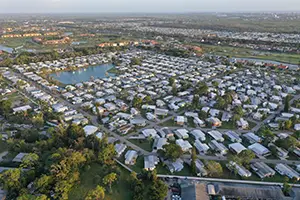
In Florida, a CDD, or community development district, serves as a local unit of special-purpose government created under Chapter 190 of the Florida Statutes. The CDD has authority limited to certain specialized functions allowed by legislation. Most of the time, that power is tied to infrastructure matters in specific development areas.
You can find many CDDs in developments across the state because they provide communities with the means to fund major improvements over the long term. These units have the authority to issue bonds and repay debt by collecting assessments on properties within the district.
However, unlike cities, state law doesn’t give CDDs the authority to adopt a comprehensive plan or building or land development codes. They must also act consistently with local government plans and regulations that apply to the area.
What is an HOA in Florida?
On the other hand, HOAs are considered private associations that run a residential community and have a set of governing documents. In Florida, HOAs are defined under Chapter 720 and must be considered corporations in the state.
The association derives its authority from state law and its governing documents, which outline the association’s rights and responsibilities. It’s governed by the HOA board of directors, made up of homeowners who volunteer and are elected to the position.
HOA vs CDD: The Main Difference
The main difference between an HOA and a CDD is their legal identity.
On the one hand, a CDD is a public government entity that has very limited authority. It mostly focuses on public infrastructure and community-wide facilities. Additionally, state law grants CDDs certain special authority, primarily for financing, planning, operating, and maintaining specific public improvements and community facilities in the area.
Meanwhile, HOAs are private corporate associations that govern and manage planned development communities. They usually focus on private community operations. These associations are responsible for upholding and enforcing the covenants and bylaws. It also manages common amenities, plans, and budgets for the community and ensures that everything runs smoothly.
Florida CDD vs HOA: How Costs Work
Managing funds and expenses is usually one of the main reasons residents want to understand the differences between a CDD and an HOA. Here’s how assessments work for each type.
CDD Assessments
Assessments for CDDS usually appear on the annual property tax bill. They are considered “non-ad valorem” assessments or dues that are not based on the property’s value. Instead, they are based on a unit of measure determined by the levying authority.
CDD assessments may include a portion for operations and bond repayment. The amount designated for operations can vary each year, as the annual budget changes. Meanwhile, the bond portion may remain tied to the repayment schedule intended to service infrastructure debt.
HOA Assessments
Homeowners pay HOA assessments directly to the association itself or through its management company. The funds collected for these dues are used for expenses authorized by the governing documents and the approved budget.
Unlike CDD dues, HOA fees are not collected via the county’s tax bill. Additionally, if a homeowner fails to pay HOA dues, the association may have collection rights under Chapter 720 of the Florida Statutes and as stipulated in the governing documents.
How CDDs and HOAs are Governed
Governing CDDs are public in nature, with a board of supervisors overseeing things. According to state law, landowner elections may be done in the early days of the CDD, with an eventual transition to qualified-elector elections. In many districts, that begins after six years, when the area has enough electors who meet the requirements.
For these districts, meetings should always be open to the public. Additionally, financial statements should be audited by an independent CPA at least every year. These two ensure that the district remains transparent.
In contrast, HOA governance remains private, even though it’s still regulated by state law. HOAs are run by a board of directors, who have a fiduciary duty to the community and the association. Under state laws, an HOA is required to keep and maintain official records. They would also need to have them available for homeowner members to access.
Can a Community Have Both a CDD and an HOA?
Yes. Many Florida communities have both a CDD and an HOA. In such cases, the district may fund and maintain infrastructure, while the HOA may enforce deed restrictions and oversee day-to-day association operations.
This setup can work well when responsibilities are clearly separated. It can also frustrate residents when they receive two bills or are unsure whether to contact the district manager or HOA manager.
Clear communication helps avoid conflict. The HOA should not promise action on CDD-owned facilities without coordinating with the district. The CDD should also make it easy for residents to understand assessments, meeting notices, budgets, and facility rules.
What Buyers and Boards Should Review
Buyers should review both the CDD and HOA obligations before purchasing. Florida law requires a CDD disclosure for the initial sale of property within a district, stating that the district may impose and levy taxes or assessments on the property.
Florida also requires a disclosure summary for prospective parcel owners in communities with mandatory HOA membership. The disclosure states that the buyer will be obligated to be a member of the HOA and that restrictive covenants govern the use and occupancy of properties in the community.
HOA boards should also understand the relationship. When a CDD exists, the association should know which areas it owns, which areas the district owns, which vendors serve each entity, and which rules apply to shared facilities. This reduces duplicate spending and helps prevent the HOA from enforcing beyond its authority.
A Clear Separation of Powers
Both can affect daily life in a Florida neighborhood. When buyers and boards understand the difference, they can ask better questions, budget more accurately, and direct concerns to the right entity.
HOA Explore makes it easy for associations to find HOA management companies. Use our online directory today!
Related Articles: