
The topic of HOA solar panels has become one of the most debated issues in communities across the United States. Homeowners want to lower energy costs and embrace renewable power, while HOAs often focus on maintaining uniform aesthetics and property values. This balance can lead to frequent disputes.
Are HOA Solar Panels Allowed?
Solar panels, especially installed on homes, have spiked in popularity in recent years. This shift is mainly due to the strong support behind renewable energy and sustainable solutions. Still, in HOA communities, restrictions often limit what owners can do, including installing solar energy devices.
When it comes to homeowners association solar panels, whether or not restrictions are legal depends on two things: state laws and the HOA’s governing documents.
State Laws
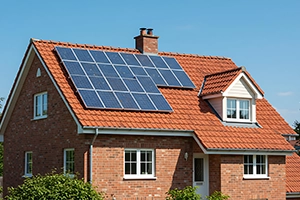
Many states have solar access or solar rights laws that limit an HOA’s ability to block or overly restrict solar installations. For example, California’s Solar Rights Act prevents HOAs from prohibiting solar panels outright. Still, it does allow reasonable restrictions that don’t reduce performance by more than 10 percent or increase costs by more than $1,000.
Florida law also protects homeowners. It bars associations from banning solar energy devices but allows them to regulate placement so long as the changes don’t harm efficiency.
Texas, Colorado, and Arizona have similar protections in place. In total, more than 25 states and Washington, D.C., have passed laws restricting HOA authority over solar installations.
When considering solar restrictions or denying applications for installations, boards should first check their state laws. Violating these laws can result in potential liability as well as harm to the association’s reputation.
Governing Documents
If state laws are silent, associations should refer to their governing documents. These documents, particularly the CC&Rs and bylaws, should detail what is and isn’t allowed.
Some communities lump solar restrictions into broader architectural guidelines. This is a dangerous practice, as it creates loopholes in the governing provisions. It is best to address the installation of solar energy devices specifically.
Even with state protections, an HOA’s governing documents may impose specific regulations. These can include placement limitations, roof material requirements, or architectural review procedures.
Typical HOA Solar Panel Regulations
Associations that permit solar panels often enforce specific rules that regulate them. These rules help ensure compliance with community standards while balancing the desire for renewable energy.
Common regulations involve the placement, design standards, contractor requirements, and ARC approval of these HOA solar panels. Let’s break them down below.
1. Placement
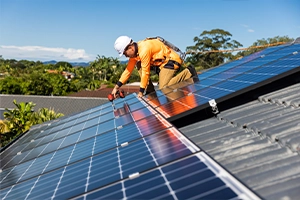
One of the most common HOA solar panel restrictions involves the placement of these panels. Many HOAs only allow panels on the rear or side of a roof to limit visibility from the street. This is an effort to maintain curb appeal.
While this practice can preserve aesthetics, it can also conflict with the panels’ efficiency. This is because south-facing roofs typically receive the most sunlight. In states with strong solar rights laws, homeowners can challenge rules that significantly reduce performance.
2. Design Standards
Many communities adopt HOA solar panel guidelines to ensure installations match the neighborhood’s aesthetics. These guidelines can dictate panel frame colors, require low-profile mounts, or prohibit visible wiring.
Some even require panels to blend with the roof, especially in historic districts where visual harmony is highly valued and enforced. While these rules aim to maintain curb appeal, they must still comply with state laws that protect functionality.
3. Contractor Requirements
Associations often require licensed and insured contractors for solar panel installations. They may ask for proof of certification, building permits, and compliance with local codes.
This can help reduce liability risks for both the association and the homeowner. Additionally, it can ensure that installations consistently meet safety standards.
4. ARC Approval
Most associations require Architectural Review Committee (ARC) approval before installation. Homeowners must submit detailed plans that show panel placement, equipment specifications, and contractor credentials.
The ARC then reviews these materials and issues a decision or recommendation to the board. State laws can also vary when it comes to the timing of this decision.
For example, in California, if the committee fails to deny an application within 45 days, it is considered approved unless the ARC has asked for additional information, resulting in the delay. The law in CA even goes so far as to penalize associations that willfully delay decisions (up to $1,000).
Common Reasons Behind HOA Solar Panel Disputes
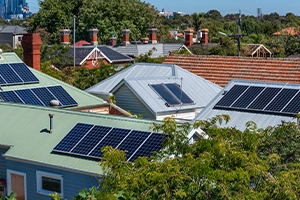
Solar panels are a frequent source of disputes in HOA communities. Even in solar-friendly states, conflicts are on the rise. Here are the most common reasons behind disputes over HOA solar panels.
1. Aesthetic Concerns
Associations often worry that panels disrupt uniform appearance or lower property values. On the other hand, homeowners argue that modern panels are sleek and can even improve resale value.
2. Efficiency Conflicts
Some HOAs require owners to place panels in less visible areas, even if it reduces efficiency. Many state solar laws already prohibit this, yet a handful of boards still push the requirement, either out of ignorance or willful intent.
3. Approval Delays
Homeowners often complain about slow ARC reviews or ignored applications. In many states, solar rights laws require HOAs to decide within a specific timeframe or else face penalties.
4. Costly Design Demands
Certain HOAs impose design requirements that inflate installation costs, such as specialized panel wraps or hidden wiring. Such requirements may be deemed unreasonable in some states due to their significant impact on costs.
5. Lack of Knowledge
Some boards are simply unfamiliar with solar rights laws. They continue to enforce outdated or illegal rules, not knowing that they are already violating statutory regulations.
6. Liability Concerns
Associations may impose stringent restrictions due to concerns about property damage or improper installation, which can lead to safety hazards. To counteract this, they often require extra insurance or indemnification, which can lead to conflict.
Noteworthy Cases Under the Solar Rights Act in California
California’s Solar Rights Act is arguably one of the strongest legal frameworks with protections in place for homeowners. Yet, disputes still arise.
One notable case, Tesoro del Valle Master HOA v. Griffin, sees homeowners challenging their HOA’s restrictions. In this case, homeowners installed 22 solar panels on a hillside slope. The HOA denied their application on grounds concerning aesthetics and stability.
Homeowners proceeded to install the panels anyway. At the trial, the jury found that the HOA’s restrictions on solar panels were reasonable under the Act. The association allowed an alternative placement for the installation, with only a 14% loss in efficiency and lower cost.
Many laws have loopholes, and while California’s Solar Rights Act is one of the most comprehensive, it is not perfect. There is room for interpretation and legal disputes.
HOA and Solar Panels
The long-standing debate over HOA solar panels is likely here to stay. As more homeowners turn to renewable energy, associations must adapt while maintaining community standards.
Hiring an HOA management company can help self-managed boards navigate solar rights laws. Start looking for the best one in your area using HOA Explore!